
Across Southwest Michigan, businesses are navigating a unique moment. AI-driven automation is reshaping roles amid economic uncertainty, hiring is slowing, and teams are being asked to adapt faster than ever before.
A new system is introduced. A structure is updated. A direction shifts.
From a business perspective, the rationale is usually clear—improve efficiency, stay competitive, adapt to the market.
And yet, even when change makes sense, it doesn’t always feel that way to the people experiencing it.
This disconnect is where many organizations get stuck.
Because what is often labeled as “resistance to change” is rarely about the change itself. More often, it reflects something less visible—but far more powerful: how people are making sense of what is happening around them.
Change Disrupts More Than Processes
When organizations go through change, the focus is typically on execution—timelines, deliverables, communication plans.
But for employees, change is not just operational. It is psychological.
It can quietly disrupt how people see themselves and their roles, including:
– A sense of competence (“Do I still know what I’m doing?”)
– A sense of identity (“Who am I in this new environment?”)
– A sense of stability (“Is what I rely on still true?”)
Even small changes like new leadership, shifting priorities, and updated expectations can create an internal ripple effect.
And when people cannot quickly make sense of what is happening, uncertainty fills the gap—often showing up as hesitation, stress, or disengagement.
When we understand it this way, the response required is different.
It is not about pushing harder or simply communicating more frequently. It is about helping people feel more grounded and confident in themselves so they can adapt and move forward.
It’s About Sense making — Not Resistance
One of the most overlooked aspects of organizational change is sense making—the process through which people interpret and assign meaning to what is happening.
Without it, even well-designed strategies can struggle.
With it, people are more able to:
– Reconnect with their role in the bigger picture
– Regain confidence in their ability to adapt
– Move forward with greater clarity and less friction
This doesn’t require complex interventions. Often, it starts with small but intentional shifts in how leaders and teams engage during moments of change.
How Adaptability Actually Improves
Adaptability is often treated as a skill employees either have or need to develop.
But in practice, adaptability is less about capability and more about whether people feel psychologically safe—and trust themselves enough to move forward.
When people feel grounded in this way, they are more likely to:
– Engage rather than withdraw
– Experiment rather than hesitate
– Move forward even without perfect certainty
In other words, adaptability cannot be forced.
It emerges when individuals feel safe enough—and steady enough—to navigate what they do not yet fully understand.
This is why efforts to “increase adaptability” often fall short when they focus only on training or compliance. Without addressing how people are internally processing change, those efforts can feel disconnected from the lived experience of employees.
When organizations instead support sense making—helping people interpret, orient, and find their footing—adaptability becomes a natural outcome rather than an imposed expectation.
What This Looks Like in Practice
In environments where change is constant, a few grounded approaches can make a meaningful difference:
1. Slow down the initial reaction
Not every moment of uncertainty requires an immediate solution. Creating space to pause can prevent reactive decisions and allow for clearer thinking.
2. Acknowledge what’s being disrupted
Naming what has changed—not just operationally, but experientially—helps people feel seen and reduces unspoken tension.
3. Reconnect people to what still holds
In times of change, not everything is shifting. Reinforcing what remains stable can restore a sense of grounding.
4. Normalize the learning curve
Change often requires people to operate without full clarity. Framing this as part of the process—not a failure—can reduce pressure and self-doubt.
Moving Forward
Organizations today are navigating an unprecedented pace of change.
But the challenge is not just the volume of change—it is how it is experienced.
When leaders and teams recognize that change disrupts meaning before it disrupts behavior, they are better positioned to respond in ways that support both performance and people.
Because ultimately, successful change is not just about what is implemented.
It is about whether people can find their footing within it.
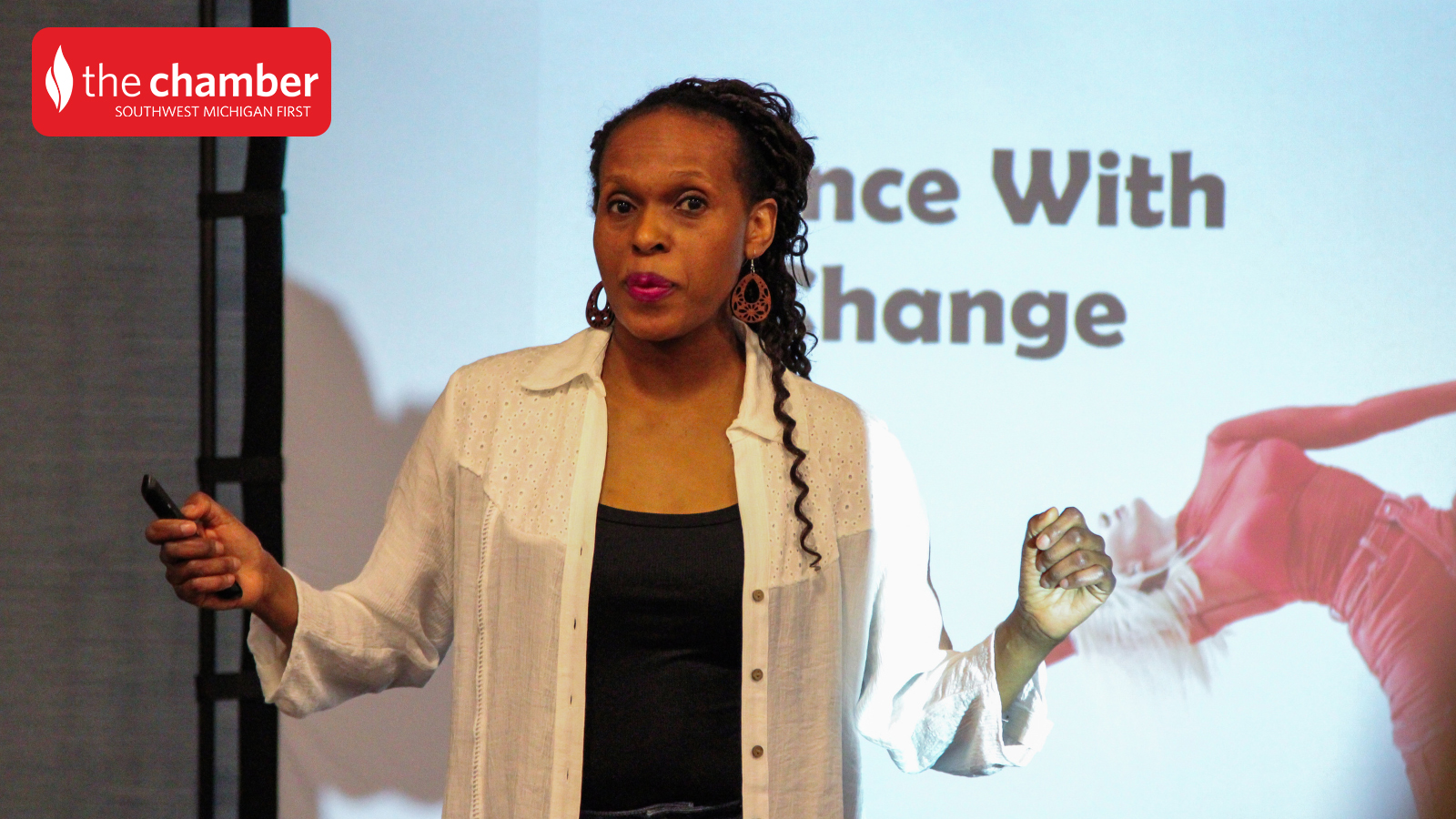
About Dance With Change
 Founded by Dr. Khutso Madubanya, Dance With Change helps individuals, leaders, and organizations navigate personal and professional change with greater confidence, clarity, and resilience. Through speaking engagements, coaching, workshops, and the P.I.V.O.T.™ Method framework, the organization equips people with practical mindset tools to adapt to life’s transitions, overcome uncertainty, and move forward with purpose. Rooted in the belief that change is inevitable but growth is possible, Dance With Change empowers people to transform disruption into opportunity.