
The call usually comes on a workday. A parent has fallen, or a diagnosis has changed everything, or the assisted-living apartment that took months to find suddenly has an opening — and it’s move-in week. You handle it, because that’s what families do. Then, a few weeks later, a second realization: somebody has to deal with the house. And that somebody is you.
I work with Southwest Michigan families in exactly this moment, and the pattern is remarkably consistent: the house becomes a second job — one nobody applied for, with no training and no team, colliding directly with the first job. One Kalamazoo client of ours spent many months wrestling with her mother’s house before we met and couldn’t sell it even though it was listed with a realtor. It wasn’t because she wasn’t capable, but because the job was genuinely bigger than it looks.
Here is the playbook I wish every busy adult child had on day one.
1. Stabilize the Property/Home (avoid disasters!)
In the first weeks, your attention belongs with your parent, and the good news is the house can wait — if you stabilize it. Confirm the locks. Keep the homeowner’s insurance active and tell the insurer the home is unoccupied, because vacancy can affect coverage. Keep utilities on, and in a Michigan winter, keep the heat running: a burst pipe found in March might be a five-figure problem that was preventable in January. Then secure things before anyone starts “helping”: important documents (wills, deeds, titles, insurance policies, bank records — they hide in cookbook pages and dresser drawers, not filing cabinets), valuables, medications, and irreplaceable photos. Other items can wait.
2. Know what the house is actually for
For most families in this situation, the house is both real estate AND the funding source for the care ahead. Assisted living and memory care around here commonly run many thousands of dollars a month, and the bills start immediately. The house’s equity isn’t available (without obtaining a loan) until a closing happens. That timing gap is where families get squeezed, and it drives rushed decisions. Map out the costs early: when do care costs begin, what will they run monthly, and what does a realistic sale timeline look like? A higher eventual sale price isn’t always the winner once you subtract what months of waiting cost you — and a fast, deeply discounted sale isn’t automatically the answer either. The right decision comes from seeing both numbers side by side.
3. Sort belongings – use a system
My observation is that “the stuff in the house (aka belongings)” stops people from moving forward – primarily because of emotions. Be systematic. Use four boxes (or areas/rooms): keep, give to family, donate or sell, and toss. Invite siblings early in the process so no one feels ambushed over a sentimental item, and take photos of what you can’t keep — a picture of Dad’s workbench may preserve the memory without the obligation. Go slowly near paper: savings bonds have been found taped under drawer liners and important documents tucked into books. Short sessions, one room at a time, often beat marathon weekends that end in regret.
4. Run the condition math before choosing a path
Nearly every inherited or long-owned home needs work before it can sell well — and condition, not the calendar, is what usually discounts a house. You have three basic paths: fix it up and list it, sell as-is to an investor at a significant discount, or something in between. The right answer depends on the home, the market, and your family’s capacity. What I encourage every family to do is simple: get the actual numbers for at least two paths before committing to one. The spread between an as-is offer and a prepared home’s market value is routinely large enough to fund the care conversation in step two — which is why it deserves an hour of analysis, not a decision made from exhaustion.
5. Delegate like the professional you are
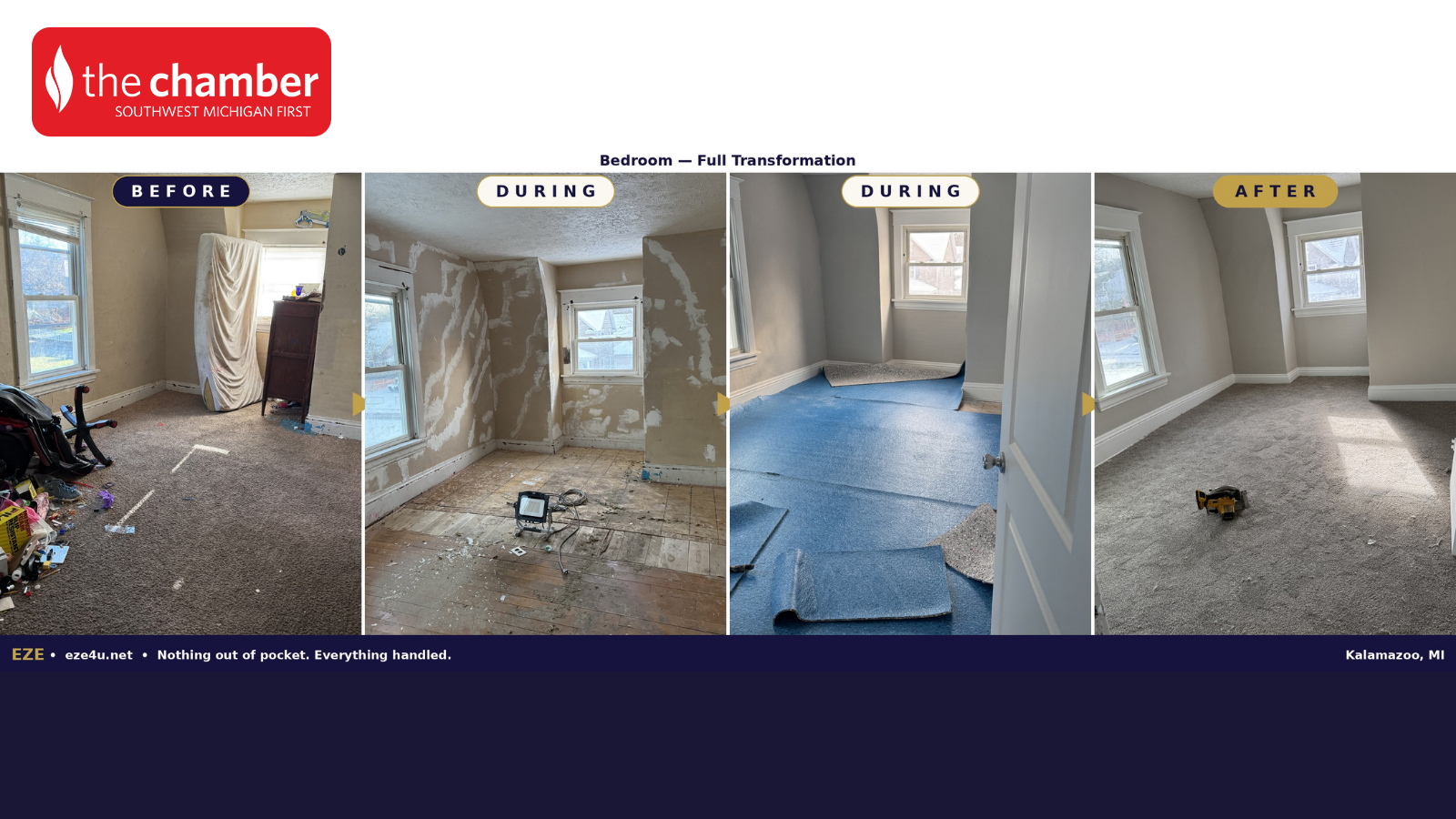
At work, you don’t personally do everything — you define the outcomes and build a team. Or you become a part-time project manager, mover, clean-out crew, handyman, cleaner, landscaper, and decorator/stager. One of our clients inherited his late parents’ home in Three Rivers while living out of state; coordinating repairs and cleanout from another time zone felt impossible until the work was structured the way any executive would structure it — one accountable point of contact on the ground, a defined scope, photo updates, decisions made remotely. That structure exists in many forms: a capable realtor with a strong vendor list, a senior move manager, a family member with time and authority, or a transition company like ours that coordinates (and, in EZE’s case, funds) the entire preparation so the family pays nothing out of pocket before closing. The specific solution matters less than the principle: your role is decision-maker, not laborer.
6. Get the legal and tax questions answered early
Before anything sells, several questions need answers: Whose name is on the title? Who has legal authority to sell — and does the power of attorney cover real estate? What are the tax implications, including stepped-up basis on inherited property? There are often other requirements for transferring title of a home and obtaining a preliminary title report from a title company will provide a view to these. A short conversation with an elder-law attorney and a CPA at the start routinely saves real money and keeps a closing from stalling. (This is general information, not legal or tax advice — your own professionals should weigh in.)
The bottom line
If you lead a team, you already possess important skills this job requires — you just need to apply them deliberately. Families that do protect three things at once: their parent’s equity, their own careers, and the sibling relationships this season so often strains.
Getting your loved one settled is the hard part. With a plan — and a team — the house doesn’t have to be.
About EZE
 Ryan Miersma is the founder and president of EZE, a Southwest Michigan company that funds and coordinates the repairs, cleanout, and preparation a family home needs to sell for full market value — with nothing out of pocket, repaid from the sale at closing. A lifelong West Michigan resident, Ryan works with seniors and their families through the hardest home transitions.