
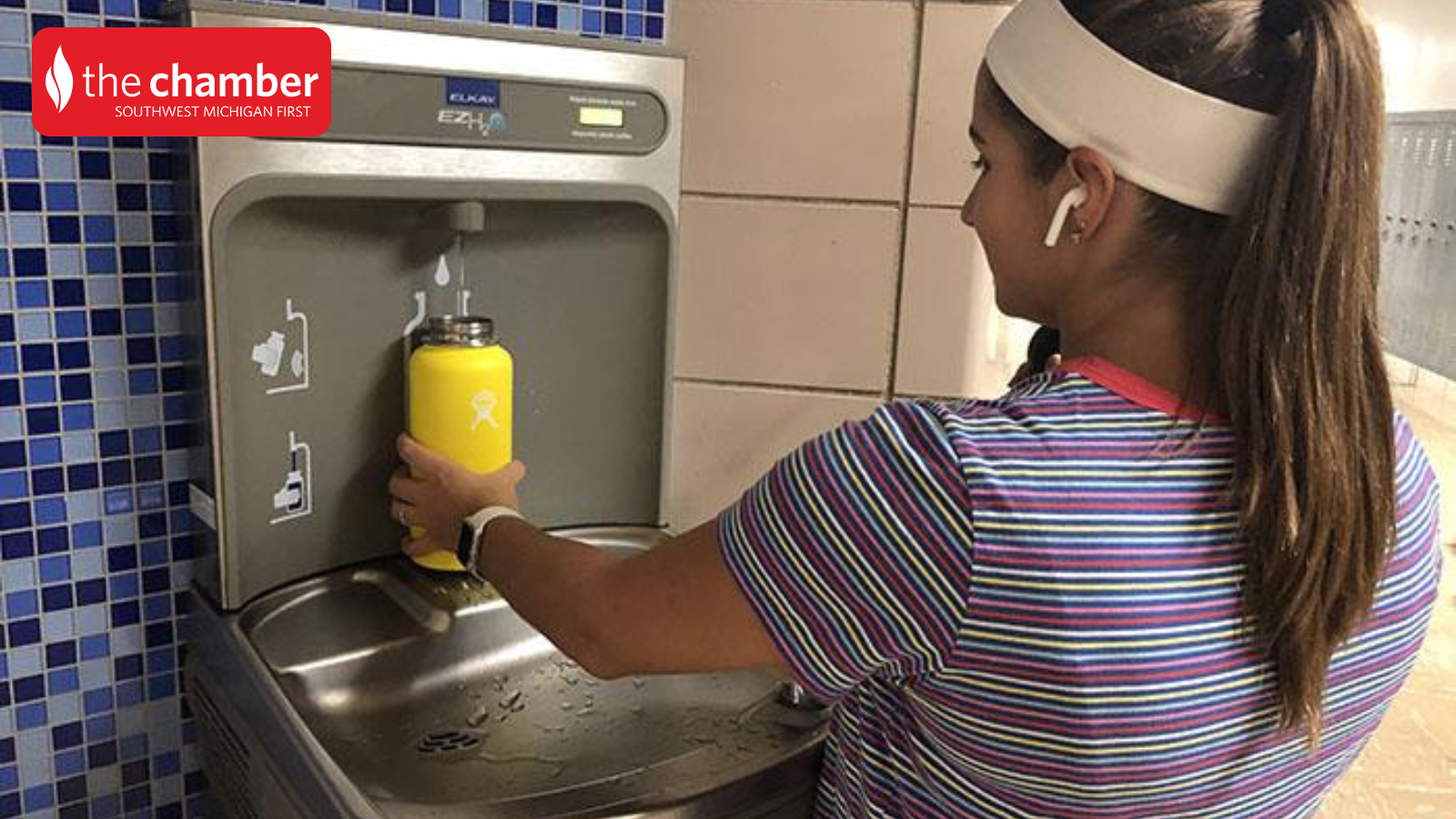
While students are enjoying summer break, Michigan schools are busy preparing for the year ahead—and some of that work is happening at an unlikely place: the drinking fountain.
For some schools, summer preparations now include a relatively new responsibility—sampling and testing drinking water from bottle-filling stations, drinking fountains, and other locations where lead-reducing filters have been installed.
It’s part of Michigan’s “Filter First” law, a bipartisan effort aimed at reducing children’s potential exposure to lead in drinking water at K–12 schools and licensed child care centers.
Over the past couple of years, schools and child care centers across Michigan have been implementing the new requirements. That has included identifying where water is used for drinking and food preparation, developing drinking water management plans, and installing approved lead-reducing filters.
Now, the focus is shifting toward the ongoing work of testing filtered water, replacing filter cartridges, maintaining equipment, and documenting that these safeguards continue to work as intended.
For most parents—and probably many people outside of education or facility management—much of this happens quietly in the background. So why was Filter First adopted, how does lead get into drinking water, and what exactly are these filters designed to do?
Why Lead in Drinking Water Matters
The Flint water crisis, which began in 2014, brought national attention to the devastating consequences of lead exposure through drinking water. Here in Michigan, it also raised greater awareness about aging water infrastructure, lead service lines, and the plumbing that delivers water to our homes and buildings.
It would be too simplistic to say that Flint directly led to Filter First. The legislation came years later as part of broader efforts Michigan has undertaken to reduce lead exposure. But Flint changed the conversation around lead in drinking water and brought much greater attention to the issue.
Lead is especially concerning for children. According to the Centers for Disease Control and Prevention, no safe blood lead level in children has been identified. Lead exposure can affect a child’s developing brain and nervous system and has been associated with learning difficulties, developmental delays, and behavioral problems.
Lead in drinking water can also be misunderstood. Unlike some water quality problems, lead can’t be seen, tasted, or smelled in drinking water—which is why water testing is so important.
Water leaving a municipal treatment plant may meet drinking-water standards, but there can still be opportunities for lead to enter the water before it reaches the tap. As water moves through lead service lines, older plumbing, faucets, fixtures, and other components containing lead, corrosion can cause small amounts of lead to dissolve or break off into the water.
Schools can present a unique challenge because water may sit unused in plumbing for extended periods, particularly over weekends, holidays, and summer breaks. The longer water sits in contact with lead-containing plumbing materials, the greater the opportunity for lead to enter the water.
How Filter First Works
That is where the basic idea behind Filter First comes in.
In 2023, Michigan adopted bipartisan legislation establishing new requirements for K–12 public and nonpublic schools and licensed child care centers. Rather than relying solely on testing to identify lead at a fixture, Filter First takes a more proactive approach by requiring approved lead-reducing filters where water is consumed.
These locations—referred to as “consumptive fixtures”—can include drinking fountains, bottle-filling stations, and faucets where water is used for drinking, cooking, or preparing food and beverages.
As water passes through a certified filter cartridge, the filter reduces lead that may be present before the water is consumed. In simple terms, it provides a final layer of protection between potential sources of lead in the plumbing system and a child taking a drink.
Lead in drinking water is generally measured in parts per billion, or ppb. When it comes to lead exposure, lower is always better—the U.S. Environmental Protection Agency’s health goal for lead in drinking water is zero. Testing water after filtration helps verify that the filter is working as intended and identifies when additional action may be necessary.
But a filter only provides that protection if it continues to work properly.
That’s why Filter First goes beyond simply installing equipment. Schools and child care centers must maintain their filters, replace cartridges according to established schedules, and regularly sample the filtered water. Michigan schools sample filtered consumptive fixtures annually, while licensed child care centers follow a two-year sampling cycle. When sampling identifies lead, facilities must follow established procedures that can include inspecting the filtration, replacing cartridges, retesting, and taking additional action depending on the results.
An Ongoing Responsibility
And that brings us back to what is happening in schools today.
With the initial school filtration deadline at the end of the 2025–26 school year, Michigan is moving deeper into the ongoing phase of Filter First. The work is no longer just about installing filters; it is becoming part of the regular responsibility of operating and maintaining a school building.
Working in commercial water treatment, I’ve had the opportunity to work with schools and see some of this process taking place here in Southwest Michigan. What stands out to me is that the work doesn’t end once a bottle-filling station or lead-reducing filter is installed. Schools must now build routines to manage filter replacement, maintenance, testing, and recordkeeping from year to year.
That’s an important part of the Filter First story that may not be as visible to the public.
Most students will probably never know any of this is happening. They’ll simply walk up to a drinking fountain or bottle-filling station, take a drink, and head back to class.
And perhaps that’s exactly the point.
Filter First is ultimately about putting another safeguard in place to help reduce children’s potential exposure to lead—and doing the ongoing work necessary to make sure that safeguard continues to do its job.
About Gordon Water Systems
 Since 1973, Gordon Water has been helping homeowners and businesses throughout West Michigan enjoy cleaner, safer, and better-tasting water. As a family-owned company with more than 50 years of experience, Gordon Water specializes in water softening, water filtration, PFAS treatment solutions, bottled water delivery, and commercial water treatment systems. With a reputation built on integrity, exceptional customer service, and trusted Kinetico® products, Gordon Water is committed to improving quality of life through reliable water solutions backed by local expertise and personalized care.