
Many businesses put themselves at the center of their brand story because they believe credibility is what earns trust. While experience, credentials, process, and values all matter, they only become meaningful once customers believe they can trust the business. Without establishing trust first, messaging can feel like information instead of connection.
Strong messaging is built like a story. Not because marketing needs to be dramatic or overly polished, but because people make sense of information through narrative. Story gives people a structure for remembering what matters, repeating it to others, and knowing what to do next.
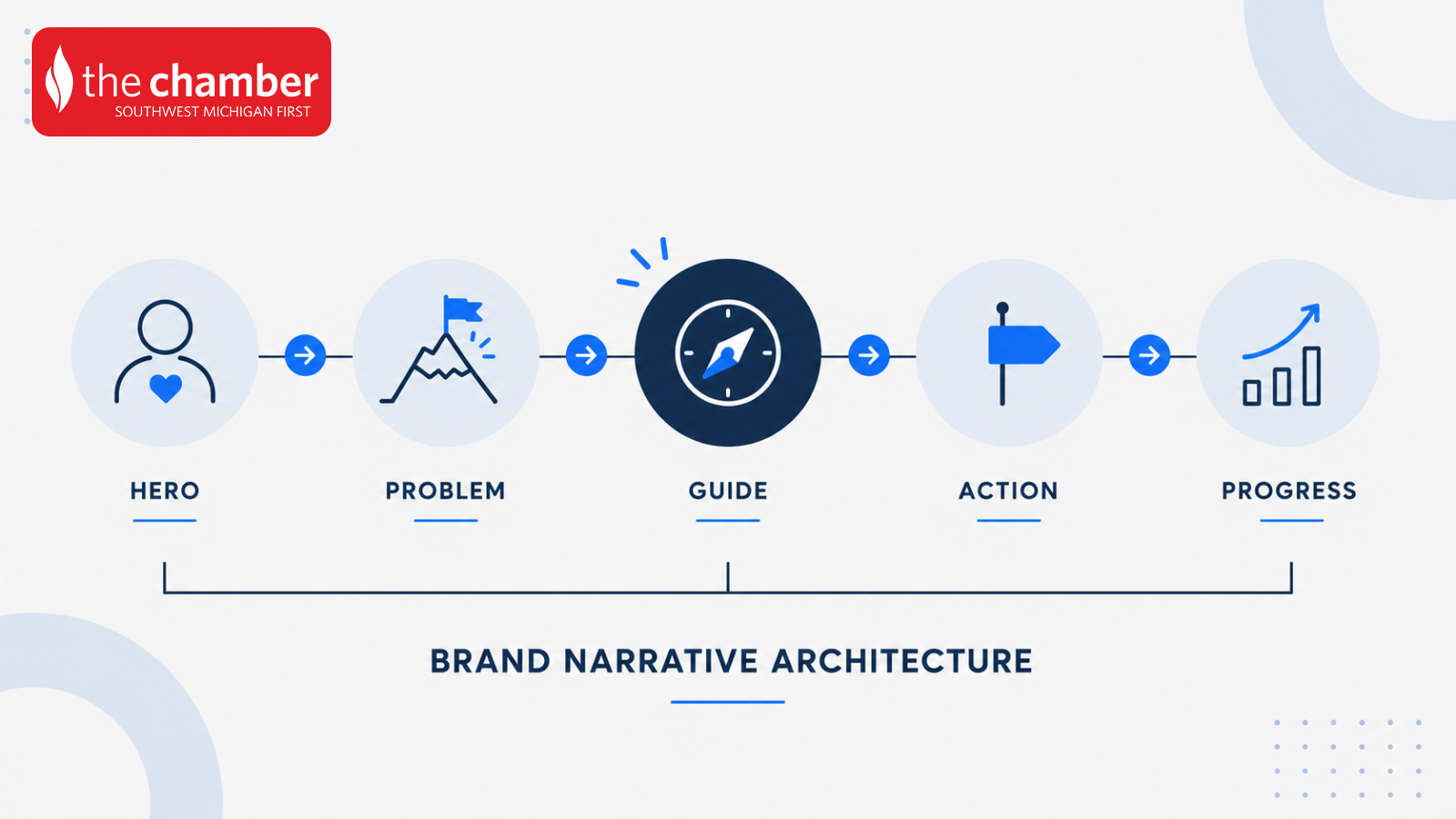
Memorable stories follow a familiar structure: a hero faces a problem, meets a guide, follows a plan, and moves toward a better outcome. Business messaging can work the same way. The customer is the hero. Your business is the guide.
This shift may sound simple, but it changes the way you communicate. Instead of leading with “Here is who we are,” the message begins with “Here is the problem you’re facing, and here is how we can help you move forward.”
This is the foundation of narrative architecture: the structure underneath your messaging that helps customers feel understood, see why your business is the right guide, and know what action to take next.
Without this structure, marketing can become a collection of disconnected pieces. Your website may explain what you offer, but not why it matters. Your social media may show activity, but not a clear point of view. You may have the right solution, but the message isn’t helping customers connect that solution to their problem.
And when the story is hard to follow, customers don’t ask for clarification. They move on.
A Quick Test for Your Current Messaging
To see whether your current messaging is doing its job, choose one place where customers first encounter your business: your homepage, social media profile, brochure, sales email, or proposal introduction.
Then read it through this story structure:
- The hero: Who is this message trying to reach?
- The problem: What problem, need, or opportunity are they facing?
- The guide: How does your business show that you understand and can help?
- The plan: What is the simple path forward?
- The action: What should they do next?
- The outcome: What changes if they take that step?
Once you’ve walked through the framework, look for the gaps.
Is the customer clearly named? Is the problem easy to recognize? Does your business show up as the guide? Is the next step obvious?
Many businesses find that the pieces are there, but they’re out of order. The message explains the service before naming the problem. It shares credentials before building relevance. It asks people to take action before making the value clear.
The facts may be right, but the message isn’t doing its job. The story needs a stronger structure.
How to Strengthen the Story
If the message feels too centered on the business, start by rewriting the opening from the customer’s point of view.
- Instead of leading with your years of experience, lead with the problem your customer is trying to solve.
- Instead of starting with a full list of services, start with the outcome those services help create.
- Instead of asking your audience to figure out why it matters, connect the dots for them.
This doesn’t mean removing your expertise from the story. It means putting that expertise in the right role: helping the customer move from problem to progress.
The Takeaway
Clear messaging isn’t just about better words. It’s about better narrative structure.
When the customer is the hero and your business is the guide, your message becomes easier to understand, trust, and act on. Before you create the next piece of marketing, ask whether your current message is telling the right story.
- Does it start with your business, or with the customer’s problem?
- Does it explain what you offer, or make the value easy to understand?
- Does it ask people to take action, or give them a clear reason to take the next step?
The goal is not to make your business sound more impressive. The goal is to make your customer feel understood and confident enough to move forward.
About Signal + Story
 Signal + Story is a brand messaging consultancy based in Kalamazoo, Michigan. Founded by Katie Boertman, Signal + Story helps businesses and organizations turn scattered messaging into a clearer story that earns trust and drives action. Through narrative strategy, messaging systems, website copy, and strategic communications support, Signal + Story helps leaders clarify what they do, who they serve, and how to communicate their value with consistency and confidence.