
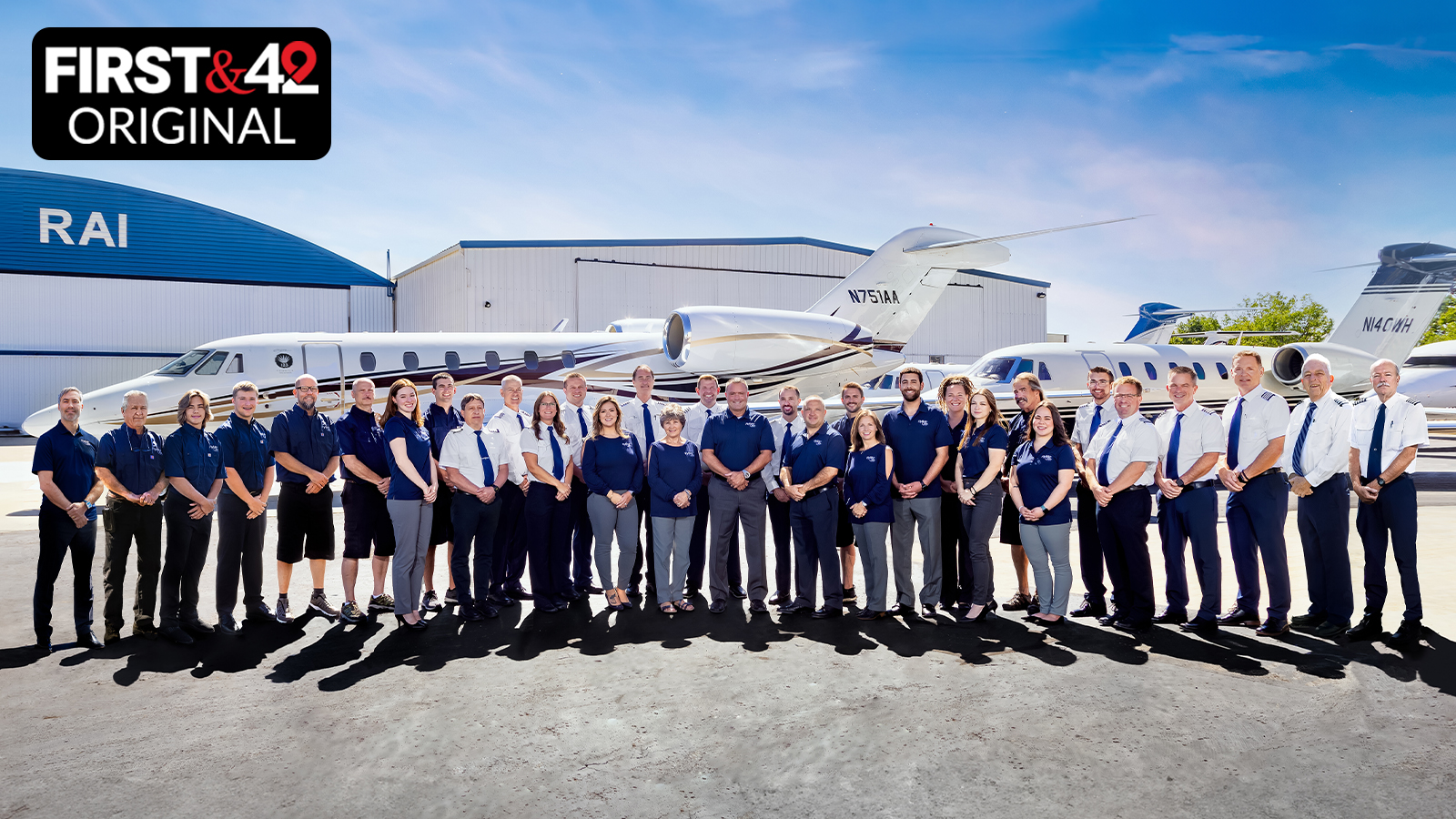

RAI Jets didn’t start with a polished brand or a big facility. It started in Sturgis with a family that poured concrete for a living and spent its off hours around an airport runway. Long before the company name existed, the work was already there. In 1982, the Riley family began managing the airport for the City of Sturgis, learning aviation from the ground up.
Becky Riley-Bakeman, now president of RAI Jets, traces the story back to that early stretch.
“It started in 1982. Our dad and uncle began managing the airport for the city of Sturgis.”
By 1990, the family made the kind of move people still repeat because it sounds surreal until you remember this was a construction family that measured risk differently. They traded a backhoe and a dump truck from their construction business for a small training aircraft. The trade was not a side project. It became the starting line for everything that followed.
David Riley, director of operations, explains why aviation was never “just something cool” for the family. It was a path out of the physical grind of concrete work and toward something the next generation could sustain. The risk the Riley brothers took paid off. Today, three generations of the Riley family are working side by side in the business. The concrete foundation holds strong but the future belongs to the skies.
“When we started back then, we poured concrete for a living. Dad and Uncle Donnie didn’t want us to have to do that our whole lives, so they tried to get us in the business.”
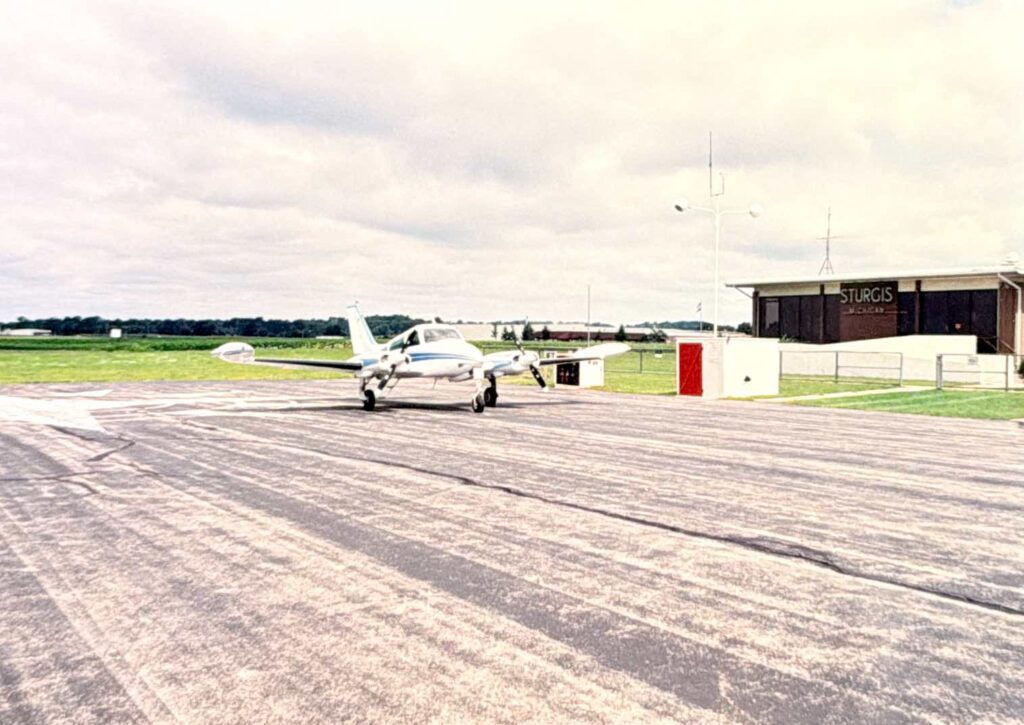
RAI’s first Part 135 charter aircraft, a twin piston Cessna 310.
For years, the two worlds overlapped. Concrete work funded the early aircraft, and aviation slowly became their main focus.
“For the first few airplanes, we paid for them via concrete pouring. We knew how to do two things, pour concrete and fly aircraft.”
In 1990, as Becky headed off to college, Brian returned from flying helicopters in the Army. He and David, who was studying aviation at Western Michigan University, began building the family’s aircraft charter business.
Becky returned from college in 1995, expecting it to be temporary.
“I came back in ’95 from college, just going to help out for a little while and then I’m still here.”
Under the Riley Aviation name, the family grew the charter operation from smaller aircraft and steadily expanded its capabilities over time.
“We started with small twin engine piston planes. Then we moved into turboprops, and then finally moved into the jets.”
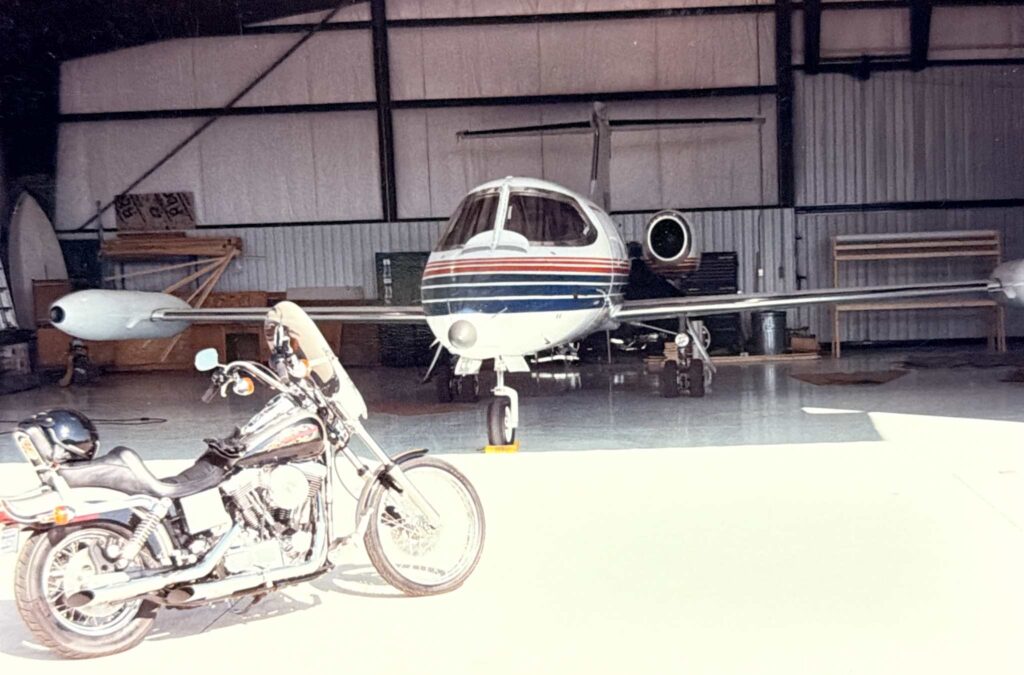
RAI’s Learjet 24, an early milestone in the company’s transition into jet aviation.
That progression meant new standards and new expectations. Bigger aircraft and bigger trips require more than a good pilot. They require scheduling, training, maintenance planning, insurance, compliance, and a system that holds up when weather turns, plans shift, and clients are on a clock.
Those early decades were also full of the kind of aviation work that tells you what a company is made of. Over the years, the team owned several helicopters, including a Bell 47 and Bell 47J-2A, and managed two Bell 206 Jet Ranger helicopters.
Summer weekends were spent traveling to events, fairs, car auctions, and airport fly-ins, giving helicopter rides. The Jet Rangers had a practical role too. They were used by two news stations to cover Friday night high school football, flying reporters from field to field so stations could cover multiple games in a single night. For several years, Brian would also fly the game football to center field before Trine University home games.
The work even reached into agriculture. Farmers would call for help with corn pollination, using rotor wash to shake the corn and support pollination. It is a very “Sturgis aviation business” detail, but it fits the larger theme. The company has always been willing to take on the work that needs doing, even when it is unconventional.
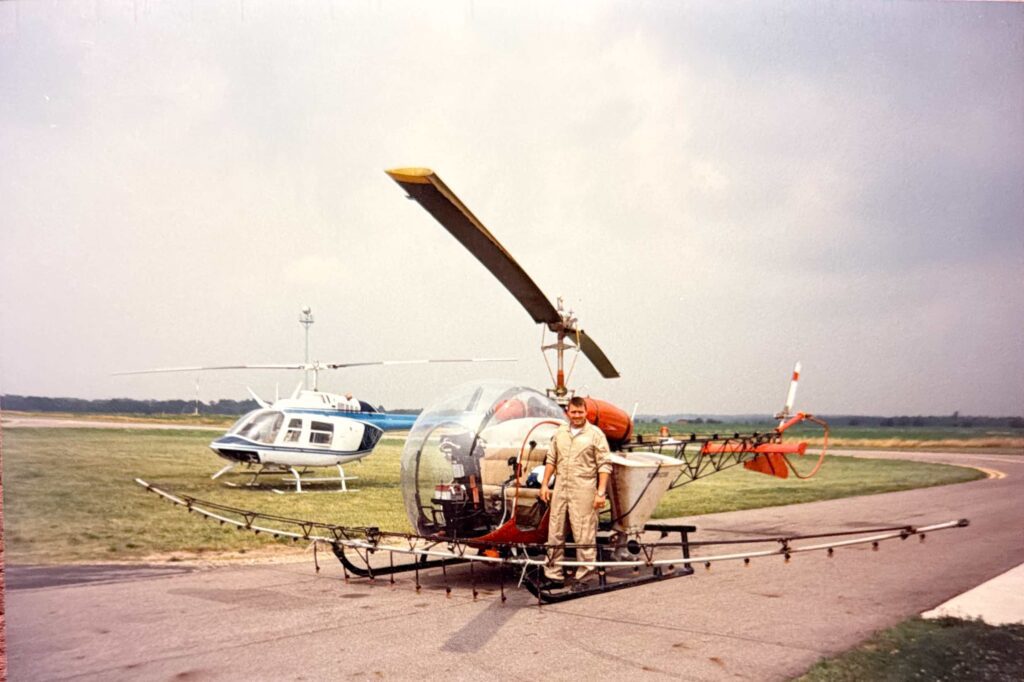
Brian Riley prepares a Bell 47 for agricultural spraying, with a Bell 206 JetRanger in the background.
Then the economy shifted. Becky describes 2008 and 2009 as the moment the business had to become something more durable.
“We ended up closing Riley Aviation. The business platform wasn’t what it needed to be to survive. And then we switched and started RAI Jets, more of managing other people’s aircraft, moving more into jets.”
That pivot shaped the modern company. Aircraft management became the foundation, with charter as an option depending on the owner’s preferences. The idea was simple: most people who want an aircraft don’t want to build and manage a full internal flight department to operate it.
David describes the model in practical terms. Owners can have RAI place the aircraft on the company’s air carrier certificate so it can fly charter when it is not being used, generating revenue. Or owners can keep the aircraft strictly for their own use, while RAI still handles the operational responsibilities.
“We offer Jet Maintenance, Jet Charter, and Jet Management. We can place your aircraft on our certificate to generate revenue when you are not flying, or your aircraft can be used entirely for personal use. Either way, we handle all the details. We manage your pilots and schedule your flights. We also coordinate maintenance, secure proper insurance, and ensure all service is done correctly.”
Becky frames the same value proposition in plain language.
“If you wanted to buy an airplane, do you know what all goes into it? Probably not, but you want an airplane. People come to us and say, will you manage it for us, because that’s what we know. Then they don’t have to hire their own flight department.”
Even with the pivot complete, Sturgis had limitations. The team had outgrown it. More importantly, clients needed better all-weather reliability. Kalamazoo was already part of that reality long before it became the home base. When weather made Sturgis difficult, Kalamazoo was often the fallback because it has stronger instrument approaches and more infrastructure.
“We moved all of our aircraft that were on charter from Sturgis up to Kalamazoo. A lot more space, better airport, more accessible airport with better instrument approaches. Back in the day in Sturgis, when there was crummy weather and we couldn’t get into Sturgis, we’d end up in Kalamazoo anyways.”
In 2016, the move became permanent. RAI purchased a hangar facility at Kalamazoo/Battle Creek International Airport. The building had been sitting for years. At one point, it had been used for cold storage, packed full and then left.
“It was packed to the top and then nothing. Forgotten about.”
Reviving the facility was real work, but it was the kind of work the Riley family understood. Becky described the size of the facility as a major advantage, especially because similar space in a larger market would be far more expensive.
“To have that size facility in a larger city, I can’t imagine the cost of that.”
Kalamazoo also changed the day-to-day feel of operations. Becky describes it as a balance of capability and ease.
“Kalamazoo has everything you could need that a bigger airport would have without as much stress, honestly.”
The airport relationship shows up in small operational moments. Becky described how responsive the airport team can be during winter weather when clients have a specific departure window.
“If you need an airplane to depart at a certain timeframe, let us know, because we’ll make sure to get over there and make sure it’s plowed for you. It’s really a down home feeling.”
One of the most interesting parts of RAI’s Kalamazoo story is how they talk about being near Duncan Aviation. It would be easy to frame proximity to a major aviation services name as competition. They do not.
“We like to work together with Duncan. We’re not competitors. We don’t compete with Duncan per se. We like to work together with them.”
David points to the practical advantage of operating in that ecosystem: access to talent and resources that allow a smaller team to deliver big-company capability.
“For the size company we are, we have way more capabilities than anybody else.”
Today, RAI’s story stretches beyond Michigan. The company purchased a facility in Fort Myers, Florida, and is growing its managed aircraft presence there. Becky described it as a meaningful next step, including a milestone that mattered internally.
“We just got our first managed jet down in Fort Myers that we brought in. When we bought the company it came with a few, but we got our first organic one.”
The Florida presence matches how many Midwest business owners live and travel. A second footprint gives RAI flexibility for seasonal travel while keeping Kalamazoo as the operational center.
In 2026, RAI plans to mark ten years since the Kalamazoo hangar purchase and the growth that followed. The milestone fits the story because it highlights the transformation. A building that sat unused is now an active hub for private aviation in the region. A family that once paid for airplanes with concrete jobs now supports aircraft owners who want the benefits of flight without building a flight department from scratch.
“We knew how to do two things, pour concrete and fly aircraft.”
About RAI Jets
RAI Jets is a private aviation company based at Kalamazoo/Battle Creek International Airport (AZO), providing aircraft management and Part 135 charter services. Founded from roots in Sturgis dating back to 1982, the company helps aircraft owners operate and maintain their aircraft without building an in-house flight department, handling pilots, scheduling, maintenance coordination, insurance, and compliance.
Learn more at FlyRAI.com and follow RAI Jets on social media for company updates and one-way flight opportunities.